

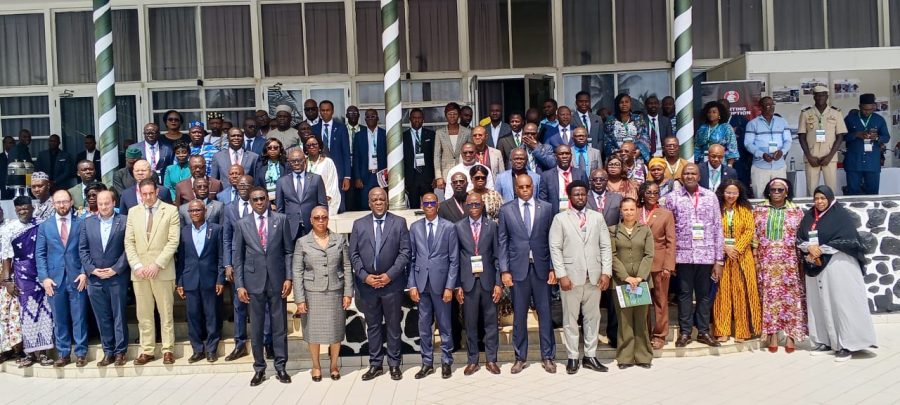

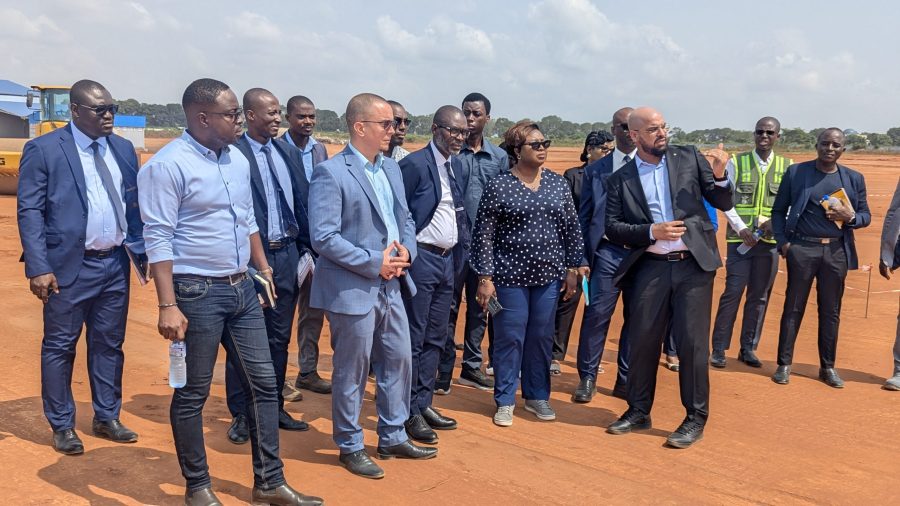
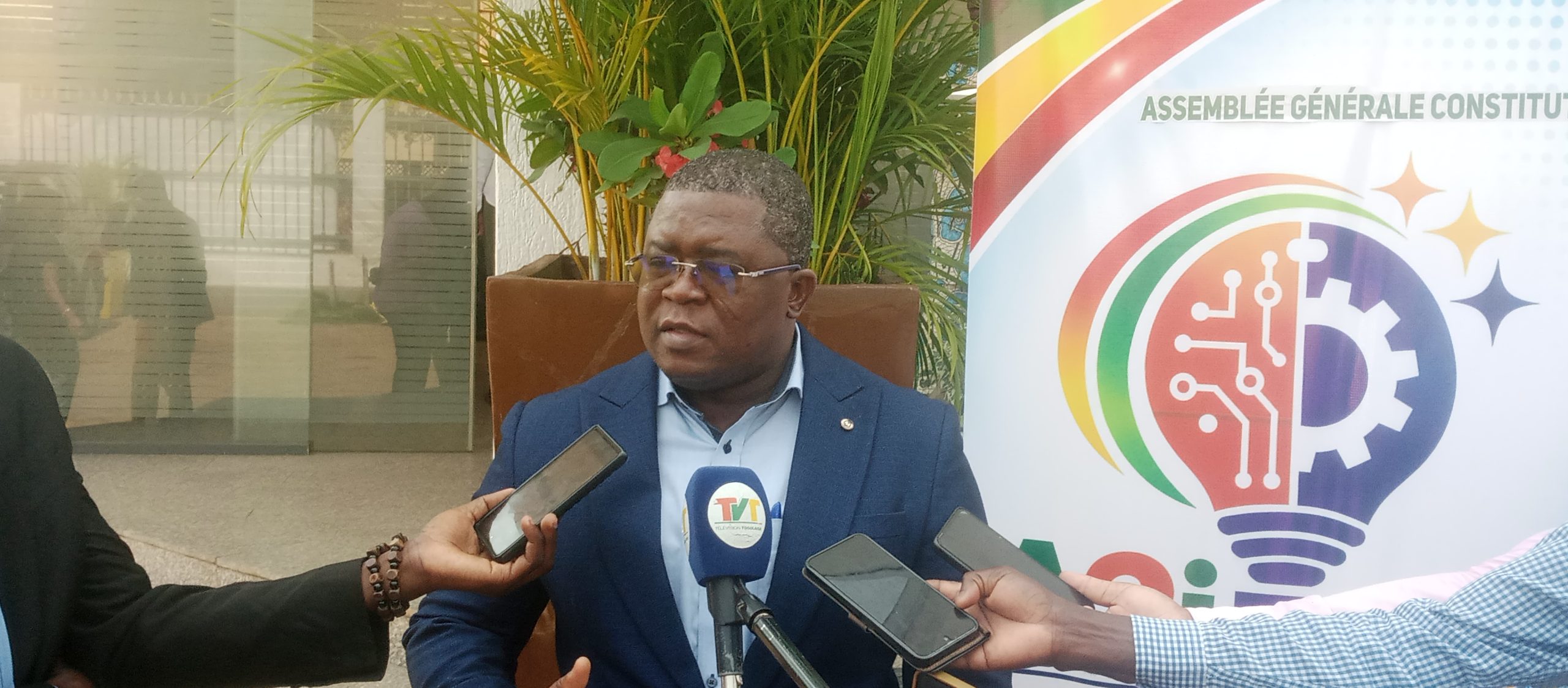



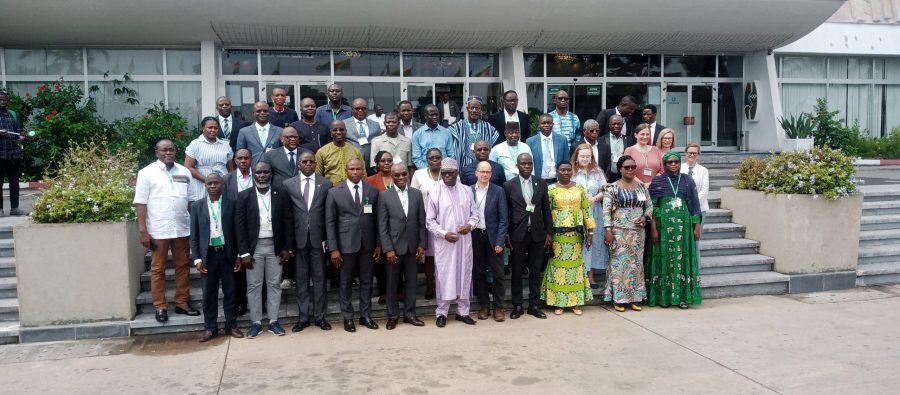
A regional training workshop on non -harmful trade opinions (NDF) of the International Trade Convention for Wild Wildlife and Floration Standed by extinction (CITES) for wood species registered in the appendix He opened this May 13, 2025, in Lomé.
Organized by the International Organization for Tropical Woods (OIBT) in collaboration with the Office for Forests Development and Exploitation (ODEF), this meeting aims to train the relevant actors that are the scientific authorities Cites, administrative managers and civil servants of West African forest departments to the use of the methodology adapted to the issue of non -prejudicial trade opinions for wood species registered with Annex II.
Here are the different speeches delivered to this meeting.
1-WELCOME ADDRESS BY THE DIRECTOR GENERAL OF ODEF
Honorable Minister of Environment and Forest Resources
Dr. Mohammed Nurudeen Iddrissu, Director of Trade and Industry at the International Tropical Timber Organization (ITTO);
Dr. Daniel Wolf, representative of the German Federal Agency for Nature Conservation,
Dear Permanent Secretary at the Ministry of Environment and Forest Resources,
Ladies and Gentlemen, Central Directors at the Ministry of Environment and Forest Resources;
Dear National Focal Point of the Convention on International Trade in Endangered Species of Wild Fauna and Flora;
Dear National Focal Point of the Convention on Biological Diversity;
Dear Consultants and Speakers;
Dear members of the CITES Scientific and Management Authorities;
Ladies and gentlemen from the private sector;
Ladies and Gentlemen, forest managers from the participating countries;
Distinguished guests, all protocols observed.
Ladies and Gentlemen, dear participants,
It is with great pleasure and humility that I take the floor to wish you a cordial welcome to Togo and indeed to Lomé, a city renowned from being at the crossroads of international conferences and meetings. Your presence at this regional workshop to discuss topics of crucial importance for environment protection and the sustainable development of our forest resources, in spite of the fact that you are so busy in your respective countries, bears witness to your desire to contribute to nature conservation.
During the Lomé meeting, we shall all learn and deepen our knowledge on how to determine non-detriment findings (NDFs) for timber species listed in CITES Appendix II and also take part in enriching discussions on timber trade and markets. These meetings will serve as a forum to exchange ideas, share experiences and upgrade our knowledge on such crucial topics.
Timer, as a renewable resource, is at the heart of many industries and is key to our global economy. However, we must recognize the fact that trade in timber cannot take place if we fail to responsibly and sustainably manage forest resources. We face major challenges such as deforestation, overexploitation and illegal trade in timber. This is where the private sector has an instrumental role to play.
Companies, as key players in the supply chain, can influence business practices and promote high sustainability standards. By adopting responsible practices, committing to international regulations and supporting certification initiatives, the private sector can not only contribute in preserving our forests. It can also strengthen its own competitiveness in the global market.
It is equally critical to foster partnerships between governments, NGOs and the private sector. These collaborations can lead to innovative solutions and integrated approaches to managing our forest resources. By working together, we can develop business models that not only meet economic needs, but also protect the environment and the rights of local communities.
Ladies and Gentlemen, dear participants,
Your presence here testifies to your commitment to protecting biodiversity and promoting responsible trade. I encourage us to actively participate in the discussions and ask questions. Together, we can contribute to a future where timber trade protects ecosystems and the communities that depend on them.
It is my hope that the most authoritative officials headed by His Excellency, the Minister of the Environment and Forest Resources, will urge us to hold cordial and fraternal discussions during this meeting in Lomé.
I wish us all a fruitful and inspiring workshop.
On this note of encouragement, I wish to thank you most sincerely for your presence here in Lomé!
2- WELCOME ADDRESS BY DR. M. NURUDEEN IDDRISU, DIRECTOR – TRADE AND INDUSTRY, ITTO.“REGIONAL WORKSHOP ON NON-DETRIMENT FINDINGS (NDF) FOR WEST AFRICA” SARAKAWA HOTEL, LOME, TOGO.MAY 13-15, 2025.
The Honorable Minister of Environment and Forest Resources of the Republic Togo, Mr. Katari Foli-Bazi,
The Director General of ODEF, Dr Pyobalo Alaba
Dr. Daniel Wolf, Representing German Federal Agency for Nature conservation.
Distinguished Head of Government Institutions here present,
CITES Management Authorities, Scientific Authorities, and our esteemed facilitators.
Distinguished workshop participants from across our member countries in the West Africa sub-region,
On behalf of the ITTO Executive Director, Ms Sheam Satkuru, I welcome you all to Lome, Togo to commence our regional workshop for non-detriment findings for West Africa where we have seven (7) ITTO member countriesand other two sister organizations participating. Your presence here is a strong demonstration to your shared commitment to ensuring sustainableforest management and sustainable trade, which is legal and traceable for our timber species, especially those that are listed under Appendix II of CITES regulations.
We wish to express our thanks to the Unites States government for their generous support which has made it possible for us to hold this workshop and meet in beautiful Lome where in the next 3 days we will have the opportunity to learn and share our experiences about CITES listed timber species and learn the tools on how to determine non-detriment findings for species listed in CITES Appendix II, through the NDF 9-step guidance. This meeting in Lome is the second one ITTO is organizing in the second quarter of the year 2025 where we had a successful workshop training and private sector engagement in San Jose Costa Rica from April 1-4, 2025 and with your indulgence and active participation we look forward to another successful NDF training here in Lome.
As you all know, the Convention on International Trade in Endangered Species of Wild Fauna and Flora (CITES) regulates the international trade in plants and animals’species, and that trade of any of these species is legal and does not threaten species’ survival in the wild. CITES works to facilitate environmentally and biologically sustainabletrade, whenever possible. And it is safe to say that without regulation, international trade in tropical timber species can pose serious risks to species by depleting wild populations, leading to their extinction. This is a scenario that we don’t want to see happen and it is for this reason that ITTO over the years has workedassiduously in partnership with global CITES players such as CITES Secretariat, donors such as USA, EU, Germany just to mention a few to implement projects and undertake training workshop in our member countries.
Honorable Minister, distinguished participants, ladies and gentlemen, as you may be aware, a well-structured andregulated market of all timber species can be a catalyst for growth and development in the timber industry in ITTO member countries and beyond. This will require collaboration among all stakeholders and actors along the timber supply chain so we can continue to trade sustainably and legally andleave our forests sustainably managed for the next generation.
Ladies and gentlemen, this is an exciting period for ITTO and its members to meet here today at Sarakawa hotel, Lome for the regional workshop. We are happy to inform members that we have assembledwell-renowned NDF Resource Persons with the requisite knowledge and experience to train us and guide us on how to prepare an NDF for the various species listed in Appendix II with a case study of Afzelia / Doussie/ Apa as it is known here in the West Africa region. So be prepared to learn and share yourexperiences with other colleagues through the facilitation of our distinguished consultants from the German Federal Agency for Nature Conservation (BfN) and TRAFFIC, respectively.
We would like to take this opportunity to thank the Office for the Development and Exploitation of Forests (ODEF) for their hard work and excellent collaborative efforts towards this event, without them this gathering would not be possible.
Last but not the least we would like to thank the city of Lome for being our host and the Ministry of Environment and Forest Resources for accepting our request to host this event.
I wish us all a productive meeting and enriching three days ahead.
Thank you.
Merci
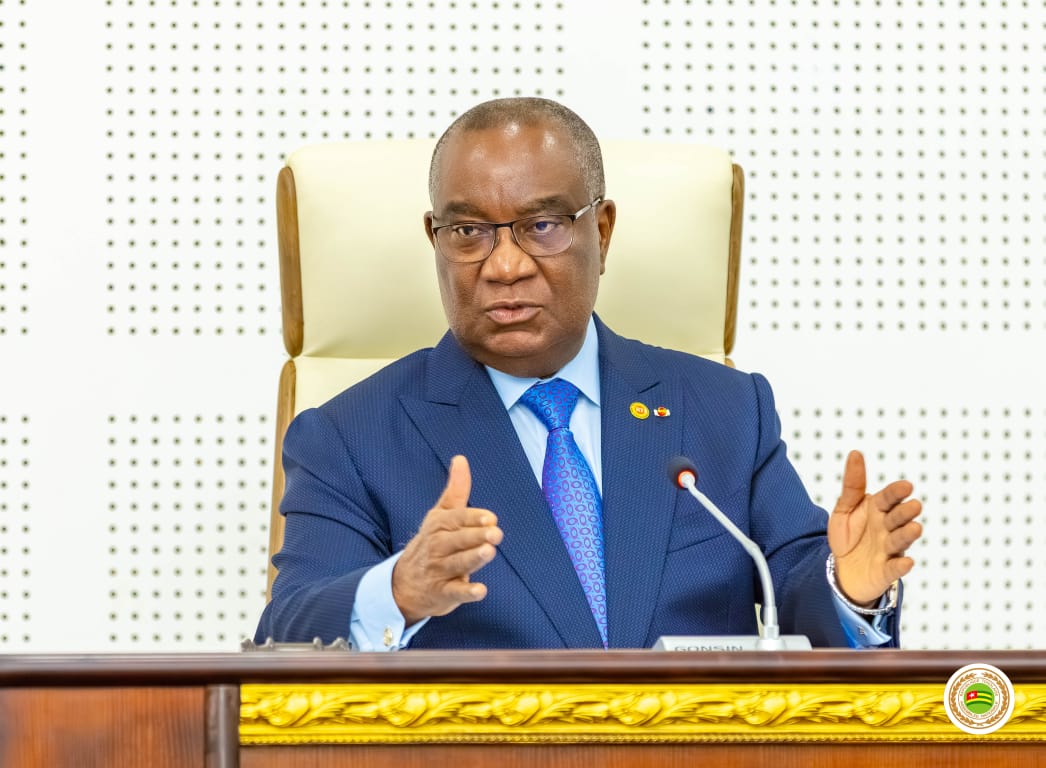
3-THE MINISTER’S KEYNOTE ADDRESS M. Katari FOLI-BAZI
Dear Dr. Mohammed Nurudeen Iddrissu, Director of Trade and Industry at the International Tropical Timber Organization (ITTO),
Dear Permanent Secretary at the Ministry of Environment and Forest Resources,
Dear Director General of ODEF,
Ladies and Gentlemen, Central Directors at the Ministry of Environment and Forest Resources;
Dear National Focal Points of the Convention on International Trade in Endangered Species of Wild Fauna and Flora;
The National Focal Point of the Convention on Biological Diversity;
Ladies and Gentlemen, dear facilitators of the workshop proceedings;
Dear Consultants and Speakers;
Honorable members of the CITES Scientific and Management Authorities;
Ladies and gentlemen from the private sector;
Ladies and Gentlemen, forest managers from the participating countries;
Ladies and gentlemen media professionals;
Dearinterpreters;
Distinguished guests, all protocol observed;
Ladies and Gentlemen, dear participants,
On behalf of the Government and on my own behalf, I wish to extend to you distinguished participants from Africa, America, Europe and Asia a warm welcome to Togo to attend this regional training workshop on CITESnon-detriment findings (NDF) for timber species listed in Appendix II on the one hand and the conference on timber trade and markets on the other hand.
Your presence at these meetings, taking time off your various busy schedules, testifies to your desire to seek to address, through sharing of views, the issues of sustainable management of biodiversity and achieve free, transparent, accessible and sustainable trade in wood on the international market.
Let me seize the opportunity of this solemn occasion to express my deep gratitude and appreciation to Mrs. Sheam SATKURU, the Executive Director of the International Tropical Timber Organization (ITTO) and her team, for having chosen our beautiful country Togo to host this international meeting.
Indeed, the choice of our country to host this workshop is not by chance. It rather reconfirms the country’s capacity to organizeinternational meetingsin an excellent fashion. You may recall, amongst other gatherings, the 55th session of the International Tropical Timber Council (ITC), held in Lomé from 07 to 12 December 2019.
Ladies and Gentlemen, dear participants,
It should be recalled that Togo joined the International Tropical Timber Organization (ITTO) since 1990, as a producer country. Togo has since been committed to facilitating the activities of this organization, as evidenced by these meetings.
Having joined global efforts to sustainably manage the environment andthe biodiversity, Togo also signed and ratified the Convention on International Trade in Endangered Species of Wild Fauna and Flora (CITES) on 3 March 1973 and 21 January 1979, respectively.
In the same vein and in accordance with the provisions of the convention, our country adopted administrative and regulatory measures to ensure better implementation with a view to achieving the objectives of conservation and sustainable use of fauna and flora species. Indeed, regulatory measures were taken to clearly outline modalities for implementing the CITES Convention in Togo.
The Convention provides for the establishment of Togo’s CITES competent authorities, notably the national management body and the scientific authority. They are responsible for issuing permits and classifying the species in accordance with the CITES convention.
Ladies and Gentlemen,
In order to address the challenge of lack of studies on endangered species, the Faculty of Science at the University of Lomé was assigned the mission to perform the function of scientific authority. As a result, the faculty of science conducted nationwide studies on wildlife species, making it possible to develop a database to keep record of all existing species, including information on their conservation status and on conditions for determining non-detriment findings (NDFs).
Ladies and Gentlemen, dear participants,
It is urgent to ensure that CITES endangered wildlife species are harmoniously and effectively managed. Therefore, the Togolese government, under the leadership of the President of the Council of Ministers, His Excellency Mr. Faure EssozimnaGNASSINGBE, placed the conservation of biodiversity high on its priority list as evidenced by the numerous initiatives taken. These include:
- securing 14 priority protected areas covering 578,246 hectares, or 10% of the national territory, in order to strengthen their ecological and socio-economic functions;
- the development of a network of 171 community and sacred forests, covering 65,719hectares;
- the adoption by the Council of Ministers, on 24 May 2023, of the bill on the creation and management of protected areas, which aims to make protected areas to enable local development, by promoting sustainable tourism and income-generating activities for the benefit of local communities;
- the establishment, by decree N°2023-112/PR of October 27, 2023, of the National Task-Force on Protected Areas (ONAP) whose objective is to create the conducive framework to mobilize financial resources to effectively manageour protected areas;
- the establishment of a 10-year moratorium, since 2016, which bans the exploitation and export to Togo of Pterocarpus erinaceus, listed in Appendix II of CITES;
- the development and adoption, in 2024, of the National Strategy to Combat Wildlife Crime (SNLCES) etc.
Ladies and Gentlemen,
The government is firmly committed to achieving the sustainable management of protected areas and the conservation of biodiversity. To do so, it allocated funds from State budget to implement the following projects:
- the National Protected Area Management Project(PNGAP);
- the National Reforestation Project (NRP); and
- the Wood-Energy Project (PBE).
This workshop, which aims to train CITES scientific authorities andforestryadministration agencies in West African on the issuanceof non-detriment findings for timber specieslisted in Appendix II, using lingué(Afzeliaafricana)as case study. This falls in line with initiatives taken by Togo and its West African neighbours to achieve the objectives of the CITES Convention in each of its member countries.
With this in mind, I wish to most sincerely thank and congratulate, once again, Ms. Sheam SATKURU and the entire ITTO team for taking the initiative to build the capacities of member countries in « biodiversity conservation ». Let me also thank all ITTO technical and financial partners, and in particular the US government, through the State Department, for funding the Lomé meetings to trainCITES scientific authorities, management authorities, private sector actors and forestry agency executives on non-detriment findings, and on timber market and trade.
Ladies and Gentlemen, distinguished guests,
I am convinced that there is a wide range of seasoned and skilled delegates gathered here. I am also convinced that the facilitators and the speakers are highly talented. So,I have no doubt whatsoever that the objectives you have set yourselves will be achieved when it comes tonon-detrimental tradeand wood trade and market issues.
Excellencies, Ladies and gentlemen,
It is on this note of hope that I officially declare open this regional training workshop on Non-Detriment Findings for timber species listed in CITES Appendix II as well as the meeting on trade and timber market.
I thank you